
Pull the emergency release cord only when the door is fully closed or fully open, and never assume it's safe just because the opener has stopped working. The cord disconnects the door from the opener so you can move it by hand — but if a spring is broken or weakening, that same door can drop fast once the opener's grip is gone. Knowing the difference between a routine manual override and a dangerous one is the whole point.
What the Cord Actually Does
The red handle hanging from a short rope near the top of your garage door is attached to the trolley — the part that rides inside the opener's rail and actually pulls the door up and down. Pulling the cord releases the trolley from the drive mechanism, which disconnects the door from the motor entirely. Once disconnected, the door moves on its springs and rollers alone, with no help (and no resistance) from the opener.
This is useful. It's also the reason the cord deserves respect rather than casual use.
When Pulling It Is the Right Move
- Power outage and you need the car out. Sierra foothill winters bring rain and wind that can knock out power for hours. If the opener has no electricity, the cord lets you lift the door manually.
- During wildfire-season power shutoffs. Preventive outages during hot, dry stretches are common in this part of the state, and they can hit without much warning. If you need access to the garage during one, manual release is the normal path.
- The opener motor has failed but the door itself seems fine. If you hear the motor hum but the door doesn't move, or the opener is dead silent, disconnecting lets you confirm whether the door moves smoothly on its own.
- Something is jammed and you need to inspect it. Pulling the cord stops the opener from forcing a door that's caught on debris, a bent track, or an obstruction.
When Pulling It Makes Things Worse
The danger isn't the cord — it's what's holding the door up once the opener lets go. Two scenarios cause real damage:
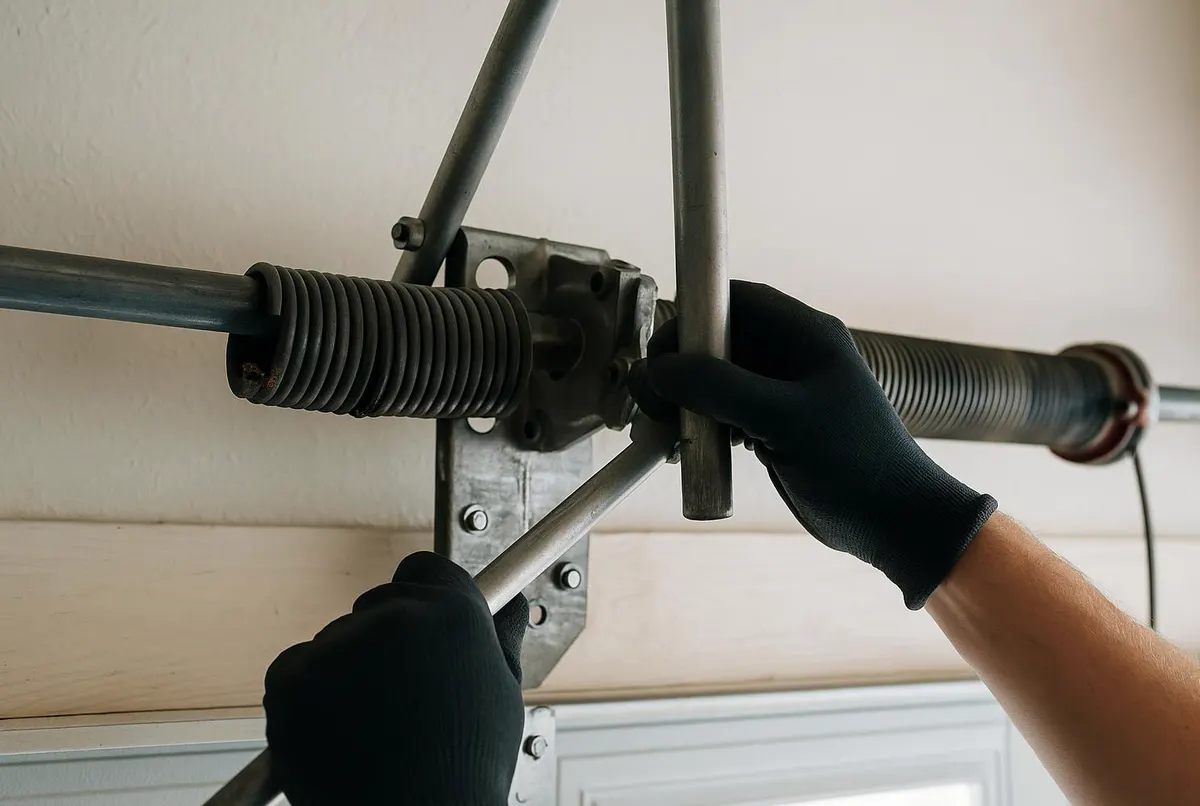
- A broken or weakened spring. Torsion and extension springs carry almost all of the door's weight. If a spring has already failed or is close to it, the opener may be the only thing keeping the door from dropping. Pull the cord with the door open in this state and it can fall suddenly — hard enough to damage a vehicle, crack concrete, or injure anyone underneath.
- Releasing the cord while the door is mid-travel. A door that's halfway up or down has momentum and an unclear balance point. Letting it go there is far less predictable than doing it when the door is fully seated at the top or bottom.
There's also a slower-building problem: a door that's been manually operated while off-track or misaligned can bend rollers and rails, which turns a simple reset into a repair.
How Badly This Can Go Wrong
A standard residential garage door usually weighs well over 100 pounds, and double-wide doors can weigh considerably more — add in heavier wood or insulated steel doors common on older mountain-area homes, and the number climbs further. When a spring is gone and nothing opposes that weight, the door doesn't ease down; it drops. That's enough force to total a cord, destroy a stored bike, or dent a car hood. It's also enough to seriously hurt a person or pet caught underneath. This is the core reason emergency release cords get a safety label stitched right onto them.
The Actions That Actually Prevent Problems
- Test your door's balance before you ever need the cord in an emergency. With the door closed, pull the cord to disconnect the opener, then lift the door about halfway by hand. It should stay in place on its own. If it falls, or if it flies upward on its own, the springs are not doing their job and the door is not safe to operate manually.
- Only disconnect at full open or full closed. Avoid releasing the cord while the door is partway through its cycle.
- Keep a flashlight near the garage entrance. Rain-season outages often happen after dark, and fumbling for the cord in the dark is how people get caught under a moving door.
- Reconnect correctly. To re-engage, pull the cord toward the door itself (not straight down) until you hear or feel the trolley lock back into the carriage, then run the opener through a full open-and-close cycle to confirm it's actually driving the door again, not just making noise.
- Watch the first cycle after reconnecting. Binding, grinding, or a door that stops partway usually means the trolley didn't seat properly or something shifted while it was disconnected.
When to Call Groveland Garage Door
If your balance test shows the door falling or jumping when disconnected, that's a spring problem, not something to keep working around with the manual cord — our Spring Replacement service handles that safely with the right tools and tensioning equipment, which isn't a DIY job given the force involved. If reconnecting the cord doesn't restore normal opener function, or the door runs rough after a manual cycle, our Garage Door Opener Repair & Installation team can diagnose whether it's the trolley, the drive mechanism, or the motor itself.
If you're in Groveland, Big Oak Flat, Coulterville, Sonora, Jamestown, Twain Harte, Buck Meadows, or Chinese Camp and your garage door isn't behaving the way it should, call Groveland Garage Door for a straightforward inspection and the right fix the first time.