
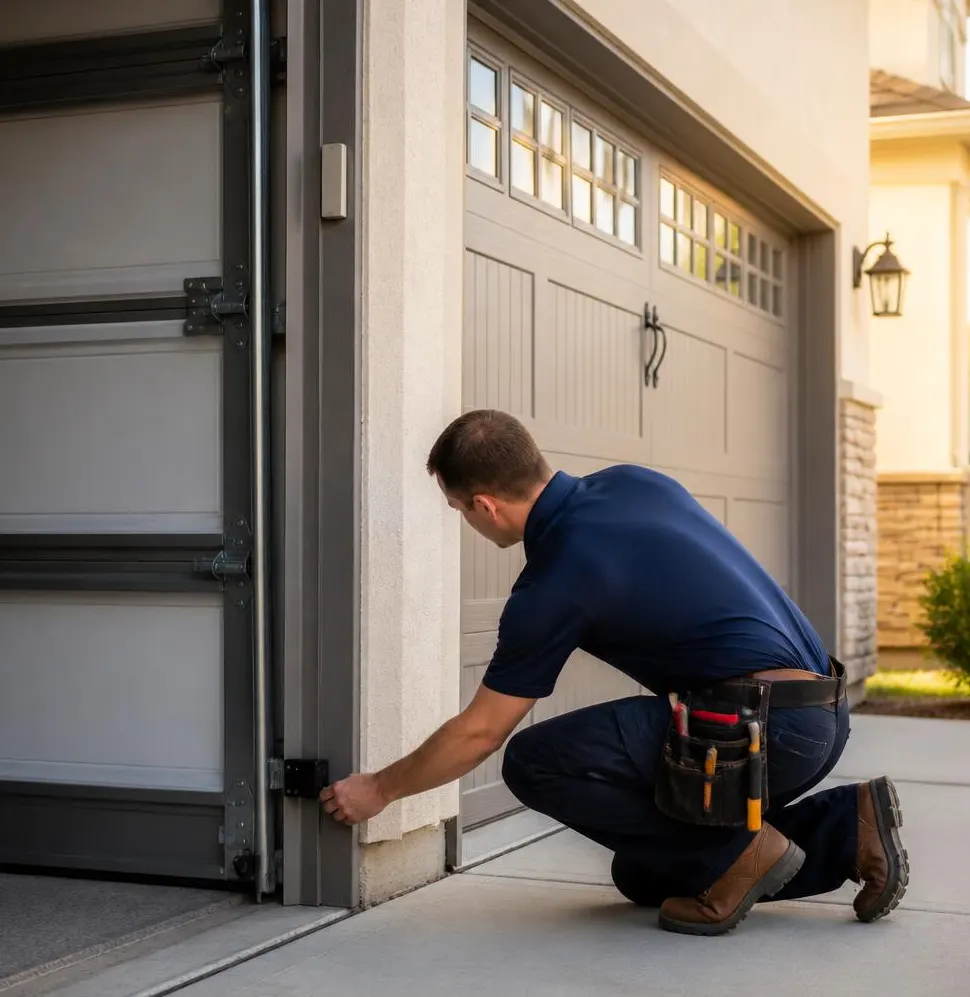
Rule of thumb: lubricate the moving metal parts of your garage door twice a year with a silicone-based or white lithium spray, and never the tracks. The exceptions are worth knowing before you grab a can of whatever is on the shelf in your garage: if your door has nylon rollers, those don't need oil at all, and if a part squeals louder after you lubricate it, that's usually a sign of a worn bearing or a bent track, not a lubrication problem.
Fall into winter is a good time to do this in the Sierra foothills. Summer dust and wildfire smoke settle into hinges and track channels, and once the rains start, that grit mixes with moisture and turns into grinding paste on anything metal. A proper lubrication now keeps hardware moving freely through the wet season instead of seizing up or rusting.
Tools You'll Need
- Silicone-based garage door lubricant or white lithium grease spray (in a can with a thin extension nozzle)
- Clean, dry rags
- A soft brush or old toothbrush for debris in hinges and tracks
- A sturdy step ladder
- Safety glasses
- A shop vac or stiff brush for clearing dust out of the track channel (optional but helpful)
Step-by-Step: How to Lubricate a Garage Door
- Close the door and disconnect the opener. Pull the manual release so the door is under your control, not the opener's. This matters for safety and lets you move the door by hand to check each part as you go.
- Clean before you lubricate. Wipe down the tracks, hinges, and rollers with a dry rag to remove dust, cobwebs, and old grease residue. If there's caked-on grit from a dry summer, brush it out first. Lubricant sprayed over dirt just creates a gummy film that attracts more dust.
- Lubricate the hinges. Spray a light coat on the pivot points where the hinges bend as the door moves. Work the door up and down a few inches by hand to let the lubricant settle into the joint, then wipe off the excess.
- Lubricate the rollers, if they're steel. Steel roller bearings benefit from a light spray at the stem where it meets the wheel. If your door has nylon rollers (most newer doors do), skip this step entirely — they're sealed and self-lubricating, and spraying them just makes them collect dirt.
- Apply a light coat to the torsion spring. This is for noise reduction only, not tension adjustment. Spray lightly along the coil while the door is closed and the spring is at rest. Never touch the winding cones or attempt to adjust spring tension yourself.
- Lubricate the bearing plates at each end of the torsion shaft. These are the metal plates where the shaft rotates above the door. A small amount of lithium grease here reduces the metal-on-metal squeak that often shows up in cold weather.
- Lubricate the lock mechanism, if your door has one. A quick spray in the keyhole and sliding bolt keeps it from sticking shut after a damp night.
- Wipe down everything and test the door. Reconnect the opener, run the door through a full cycle, and watch for smooth, even movement. Excess lubricant should be wiped off so it doesn't drip onto your car or driveway.
What to Use — and What to Avoid
- Use: a silicone-based garage door lubricant or white lithium grease spray made for this purpose. Both resist washing out in rain and don't gum up with dust the way heavier oils do.
- Avoid WD-40 as a long-term lubricant. It's a solvent and cleaner first, so it evaporates quickly and leaves surfaces drier than before. It's fine for loosening a stuck bolt, not for keeping hinges quiet through winter.
- Avoid motor oil or general-purpose household oil. These are too thin, run off the part fast, and attract dust and wildfire ash instead of shedding it.
- Never lubricate the tracks themselves. The rollers ride against the track by design, and a slick track just makes the door more likely to jump or bind. If the track is dirty, clean it with a dry rag — that's it.
What a Homeowner Can Do vs. What Needs a Technician
Everything above — hinges, steel rollers, bearing plates, a light coat on the spring, the lock — is safe, routine homeowner maintenance. It takes about twenty minutes and doesn't require touching anything under tension.
What's not a DIY job: adjusting spring tension, replacing a spring, working on cables, or opening up the opener's internal gears. If lubrication doesn't quiet a noise, or the door feels unevenly balanced, uneven balance usually means a spring or cable issue, and that's a job with real risk of injury if attempted without the right bars and clamps.
When to Call Groveland Garage Door
If you've lubricated everything correctly and the door still grinds, jerks, or reverses on its own, the problem usually isn't lubrication anymore. It's often a spring that's lost tension, a bent track, or an opener that needs adjustment. Our Garage Door Maintenance visits cover a full inspection of springs, cables, and hardware, catching wear before it turns into a mid-winter breakdown. If a spring has already failed or is clearly overdue, our Spring Replacement service gets it swapped safely with the right tension for your door's weight.
If your garage door is sticking, squealing, or just overdue for a look before the rain settles in, give Groveland Garage Door a call. We serve Groveland, Big Oak Flat, Sonora, Jamestown, Twain Harte, and the surrounding Tuolumne County communities, and we're happy to get your door running quietly again before winter.